
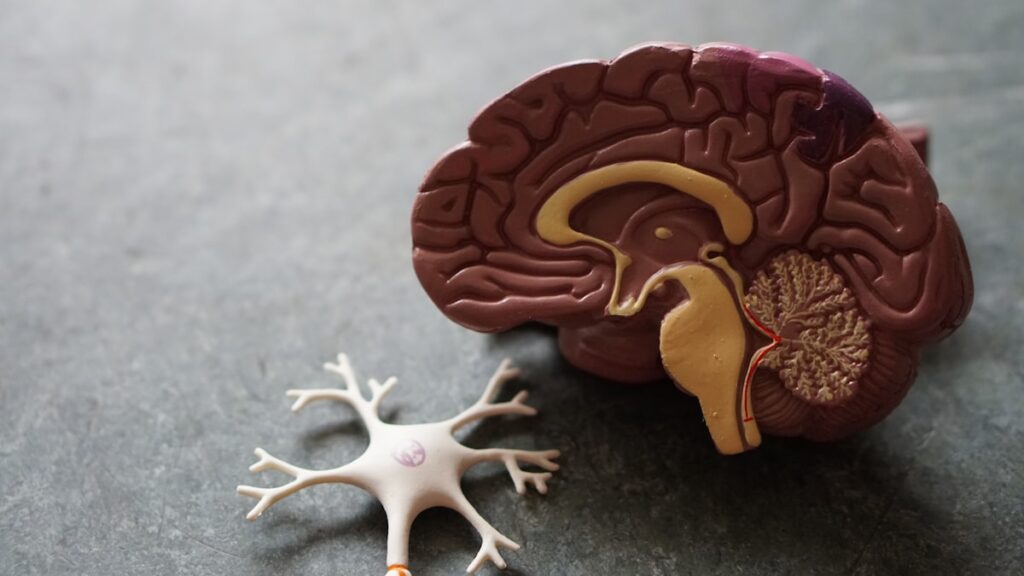
You’ve probably heard it takes 21 days to build a new habit. It’s a nice, tidy number. Unfortunately, it’s wrong. The actual science tells a more interesting story, one that involves ancient brain structures, dopamine surges, and a surprisingly simple formula that can help you rewire your behavior for good.
Whether you’re trying to meditate daily, exercise more, or just stop reaching for your phone first thing in the morning, understanding how habits actually form in your brain gives you a real advantage. Let’s break down what’s happening under the hood.
The Habit Loop: Cue, Routine, Reward
Every habit follows the same basic pattern, which researchers call the habit loop. It has three parts:
- Cue: A trigger that tells your brain to start the automatic behavior. This could be a time of day, a location, an emotional state, or even another action you just completed.
- Routine: The behavior itself. This is the part most people focus on when they want to change a habit.
- Reward: The payoff your brain gets. It could be a physical sensation, an emotional boost, or the relief of removing something unpleasant.
Charles Duhigg popularized this framework in his book The Power of Habit, but the underlying neuroscience goes back decades. The key insight is that your brain doesn’t distinguish between “good” and “bad” habits. It just follows the loop. That’s why a morning coffee ritual and a nail-biting response to stress operate on the same neural machinery.
The Basal Ganglia: Your Brain’s Habit Center
Deep inside your brain sits a cluster of structures called the basal ganglia. This is where habits live. Research published in Nature Reviews Neuroscience has shown that the basal ganglia, particularly a region called the dorsolateral striatum, plays a central role in converting deliberate actions into automatic ones.
Here’s how it works. When you first learn a new behavior, your prefrontal cortex (the thinking, decision-making part of your brain) is heavily involved. You have to consciously think about each step. But as you repeat the behavior, activity gradually shifts from the prefrontal cortex to the basal ganglia. The behavior becomes chunked into an automatic routine.
A 2025 study in PNAS revealed that the striatum incorporates behaviors into habitual actions through repetitive execution followed by rewards. The more you repeat a behavior with a consistent reward, the stronger those neural connections become, until the behavior runs almost on autopilot.
This is actually efficient. Your brain uses habits to conserve mental energy. If you had to consciously think about every action (how to tie your shoes, which route to drive to work, how to brush your teeth), you’d be mentally exhausted before lunch.
The 66-Day Reality
So where did the “21 days” myth come from? It traces back to a 1960s observation by plastic surgeon Maxwell Maltz, who noticed patients took about 21 days to adjust to their new appearance. It was never a controlled study about habit formation.
The real research came in 2009 from Phillippa Lally and her team at University College London. Their study published in the European Journal of Social Psychology tracked 96 people as they tried to build new daily habits like eating fruit at lunch or running for 15 minutes. The researchers measured how long it took for each behavior to feel automatic.
The average? 66 days. But here’s the part most people miss: the range was enormous, from 18 days to 254 days. Simple habits (drinking a glass of water with lunch) formed quickly. Complex ones (doing 50 sit-ups before breakfast) took much longer.
Two important findings from Lally’s study deserve attention. First, missing a single day didn’t derail the process. Your habit doesn’t reset to zero if you skip once. Second, people who were wildly inconsistent never formed the habit at all. The takeaway: consistency matters more than perfection.
Dopamine: The Habit Fuel
Dopamine is often called the “feel-good” chemical, but that’s an oversimplification. Dopamine is really about prediction. Your brain releases dopamine not just when you get a reward, but when you expect one.
Neuroscientists call this the reward prediction error. When something is better than expected, dopamine surges. When something matches expectations, dopamine stays at baseline. When something is worse than expected, dopamine drops. This system is how your brain learns which behaviors are worth repeating.
In the early stages of habit formation, you get a dopamine hit from the reward itself. But over time, the dopamine spike moves earlier in the loop, firing at the cue rather than the reward. This is why the smell of coffee can feel almost as satisfying as drinking it, and why walking into a gym can give you a little motivational bump before you’ve even started exercising.
This dopamine shift is also why bad habits are so sticky. If a behavior consistently delivers a quick dopamine reward (checking social media, eating sugary snacks), your brain encodes it deeply. The science of focus and brain training shows us that understanding these reward circuits is the first step toward redirecting them.
Implementation Intentions: The “When-Where-How” Strategy
Knowing the science is great, but how do you actually use it? One of the most powerful, research-backed techniques is called implementation intentions, developed by psychologist Peter Gollwitzer.
The concept is simple: instead of setting a vague goal (“I want to meditate more”), you create a specific if-then plan: “If it’s 7:00 AM and I’ve finished my coffee, then I will sit on the living room couch and meditate for 10 minutes.”
A meta-analysis by Gollwitzer and Sheeran covering 94 studies and more than 8,000 participants found that implementation intentions produced a medium-to-large effect on goal attainment. That’s a significant boost from such a simple mental exercise.
Why does it work? By pre-deciding the cue and the response, you’re essentially programming the habit loop in advance. You don’t have to rely on willpower or motivation in the moment. The situation itself becomes the trigger.
Habit Stacking: Piggyback on What You Already Do
James Clear, author of Atomic Habits, popularized a technique called habit stacking that builds directly on the implementation intentions research. The formula looks like this:
“After I [current habit], I will [new habit].”
For example: “After I pour my morning coffee, I will write in my journal for five minutes.” Or: “After I sit down at my desk, I will take three deep breaths before opening my email.”
Habit stacking works because your existing habits already have strong neural pathways. You’re using an established cue to trigger the new behavior, rather than trying to create a cue from scratch. It’s like adding a new train car to a track that’s already built.
The trick is to pair your new habit with something you do reliably every single day. If you only make coffee three days a week, that’s a weak anchor. Pick the behavior that’s as consistent as breathing.
Breaking Bad Habits vs. Building Good Ones
Building a new habit and breaking an old one require different strategies, because the neural pathways of established habits don’t just disappear. They go dormant but can reactivate quickly.
To build a new habit:
- Make the cue obvious and unavoidable
- Reduce friction (lay out your workout clothes the night before)
- Start absurdly small (two minutes of meditation, not thirty)
- Reward yourself immediately after the behavior
To break a bad habit:
- Identify the cue that triggers it
- Increase friction (put your phone in another room, delete apps)
- Replace the routine with a healthier one that delivers a similar reward
- Change your environment when possible
Research suggests that substitution is more effective than pure elimination. If you snack when you’re stressed, you need a different stress-relief behavior, not just willpower to resist snacking. The cue (stress) and the need for reward (relief) remain. Only the routine changes.
Why Environment Matters More Than Motivation
One of the most underrated factors in habit formation is your physical environment. Your surroundings are packed with cues that either support or sabotage your habits.
A classic study by Brian Wansink found that people ate 45% more food when it was placed in clear containers on the counter versus opaque ones in the cupboard. The food didn’t change. The visibility of the cue did.
Apply this to any habit you want to build. Want to read more? Put a book on your pillow. Want to drink more water? Keep a filled bottle on your desk. Want to practice mental wellness habits that boost your productivity? Set up your space so the healthy choice is the easy choice.
Making It Stick: Practical Steps
Here’s a practical framework for putting this neuroscience to work:
- Pick one habit at a time. Your basal ganglia can only automate so much at once.
- Define your implementation intention. Be specific about when, where, and how.
- Stack it onto an existing habit. Use a strong anchor behavior.
- Start tiny. Two pushups. One minute of journaling. One deep breath.
- Track it. Visual evidence of your streak triggers that dopamine prediction system.
- Expect the messy middle. Around weeks 3 to 6, the novelty fades but the automaticity hasn’t kicked in yet. This is where most people quit.
- Don’t aim for perfection. Remember Lally’s research: missing one day doesn’t matter. Just don’t miss two in a row.
Tools like Restori can help you build daily emotional wellness habits through mood tracking and guided activities that give your brain the consistent cue-routine-reward loop it needs to form lasting patterns.
The Bottom Line
Habit formation isn’t about willpower or motivation. It’s about working with your brain’s natural wiring, not against it. The basal ganglia wants to automate things. Dopamine wants to predict rewards. Your prefrontal cortex wants to offload routine decisions. When you understand these systems, building new habits stops feeling like a battle and starts feeling like engineering.
Give yourself the 66 days (or more). Set up the cues. Make the rewards immediate. And be patient with the process. Your brain is already designed to form habits. You just need to point it in the right direction.